
Font Size:

Remote metering capability will save Member-consumers energy, water – and money
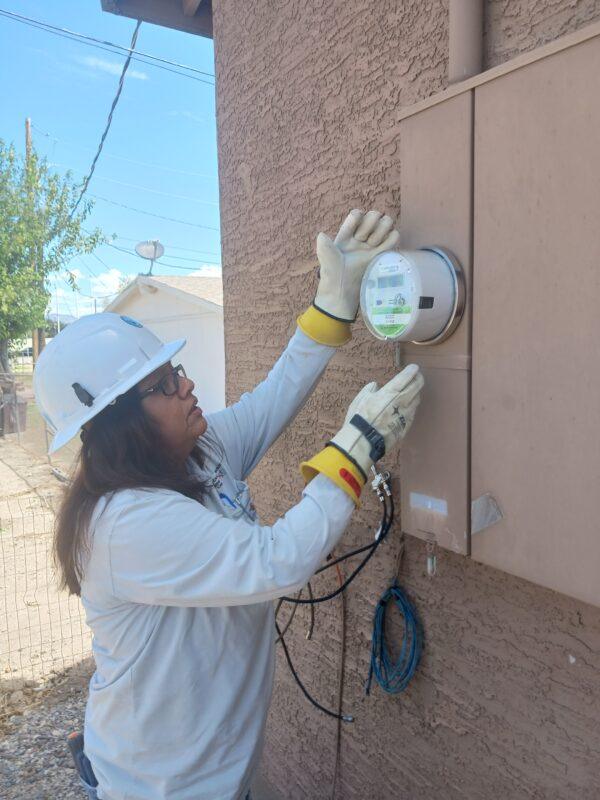
The new AMI meters are ushering in a technology that’s been around for more than 20 years, with more than 120 million – or 72 percent of the nation’s residential and commercial metering system – already safely in use with utilities throughout the United States.
A technology called Advanced Meter Infrastructure, or AMI, is about to save energy and water use – and money – for every electric and water system Member-consumer of Graham County Electric Cooperative.
Installation of AMI meters for GCEC’s 8,000 electric system Members was completed August 31; by the end of the year, AMI meters will be installed for all the co-ops water system members as well.
The new AMI meters are ushering in a technology that’s been around for more than 20 years, with more than 120 million – or 72 percent of the nation’s residential and commercial metering system – already safely in use with utilities throughout the United States.
“It’s basically a radio network connected to your meter to transmit the information from your meter to – in this case – our office,” said Phil Cook, GCEC CEO.
There are numerous advantages to using AMI meters, and Cook wants to dispel one myth that has been perpetuated since AMI technology was introduced.
“This is something that’s always prompted pushback by people who think that somehow this is an invasion of privacy, that AMI meters are reaching into your home and gathering all kinds of information they shouldn’t,” Cook said.
It’s impossible for an AMI meter to read past the wall of your house – think of your outside wall where the meter sits as the “firewall” that protects computer information – information is only gathered on the electricity that passes through into the home or business.
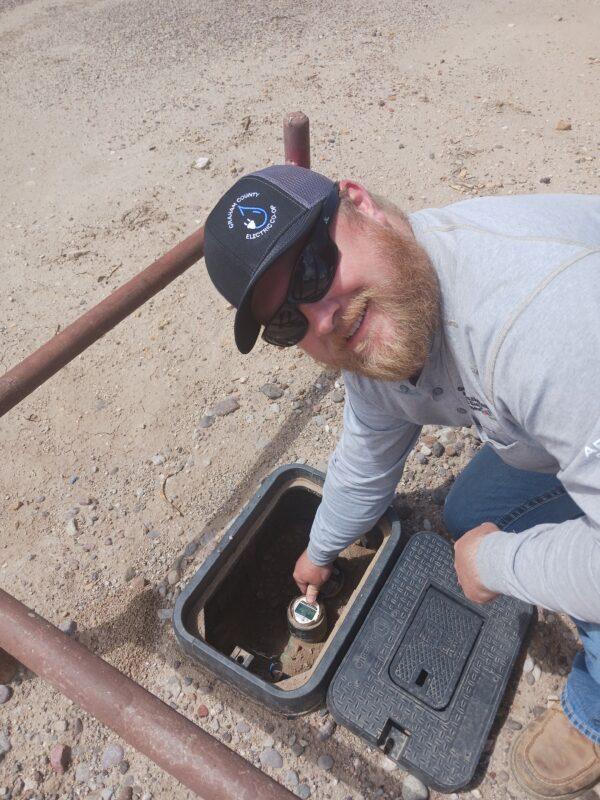 The benefits and savings are already evident, especially for a cooperative that has a far-flung rural service territory where it can take several hours to drive to a meter location.
“Some of these locations are quite remote; if you go down to Klondike for example, or to Picanya, that’s a lot of distance for us to send someone out to read a meter or try to troubleshoot the system if something goes wrong.”
“With AMI we can look at all the meters and the information remotely without having to put as many miles on our vehicles so it definitely saves money both in terms of mileage and employee hours,” said Cook.
Closer to home, the same applies in terms of employee hours, but there are other benefits as well – starting with the safety of employees.
“We recently had an employee bit by a dog, we’ve had snakes and scorpions and spiders and all kinds of things in the meter boxes, with AMI those issues go away,” Cook said.
For both the electric and the water systems the benefits to the Member are immediate.
“The data is really important because it not only allows us to see what’s happening – it allows the Members to see what’s happening in their house, in real time (through the Smart Hub app) and that information can be put to use by the Member to save energy, and water, and money,” said Cook.
For water system Members “the meter doesn’t just record water useage, it also can tell if there’s a leak at the house, and if we spot a leak ahead of time that saves you water and money, and in Arizona and our area especially we want to conserve as much as we can.
Cook said there is one difference between the water and the electricity meters;
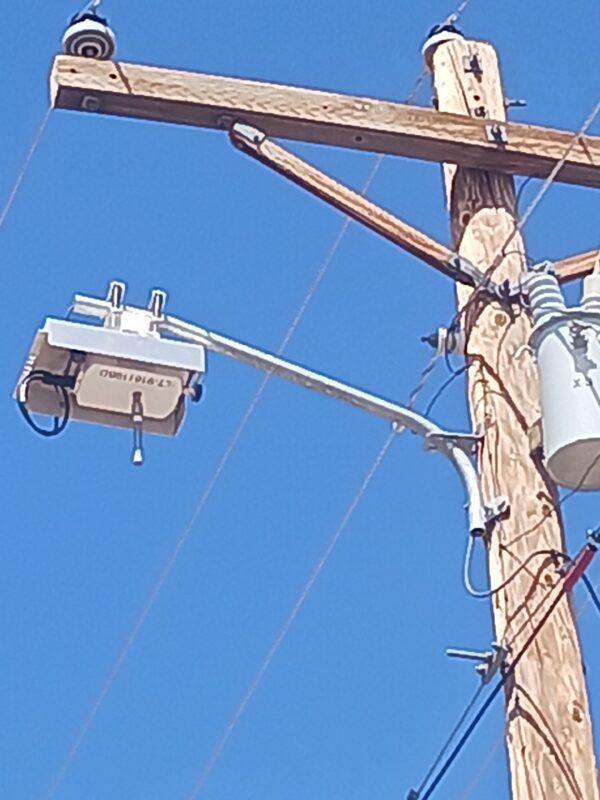 “The difference is the water meter signal goes to the Member’s electrical meter, you could say it ‘piggybacks’ on that signal, the reason being that your water meter isn’t connected to electricity – it uses a battery – and so the water meter data uses the signal from your electric meter. The batteries are good for 10 years, so it’s more efficient and cost-effective,” said Cook.
The AMI meters use a combination of radio and cellular signals to aggregate the meter information, which will be read the first of every month, allowing the co-op to go from three billing cycles a month to just one.
As always, the co-op is ready to address Member’s concerns and answer their questions.
“These meters are safe, efficient, and will save Members and the co-op money in the long run, and we are happy to work with anyone who reaches out to us,” Cook said.